
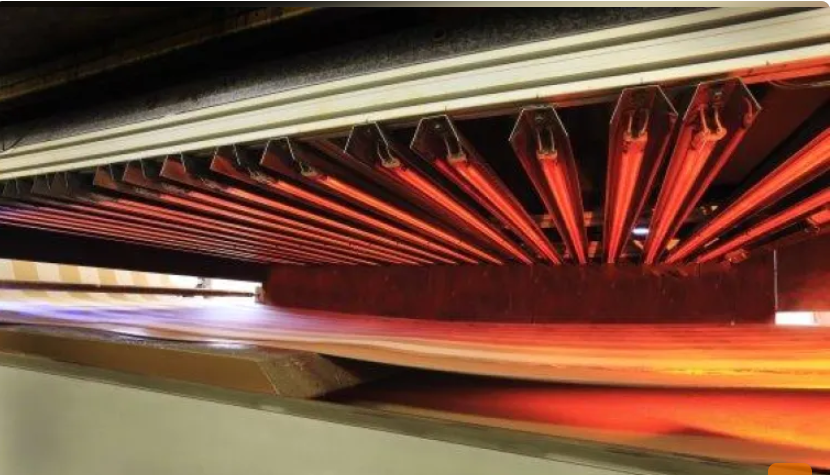
Getting Your Dye to Actually Stick: The Secret is in the Wavelength
If you’ve ever struggled with dye not bonding to fabric, you know the frustration. Most people think it’s just about cranking up the heat. But here’s the thing: it’s not about how hot the oven is. It’s about whether the dye molecule actually wants the energy you’re throwing at it. If you use a generic IR lamp, you’re basically wasting your time. A huge chunk of that energy just bounces off the fabric or heats up the air in the room. It’s inefficient and, frankly, a pain.
Why “Spectral Matching” Matters
Think of every dye like a lock and the IR wavelength as the key. When you find the right match, the dye molecule just absorbs the energy. Instead of heating the surface of the fabric and praying the heat eventually soaks through to the middle, the right wavelength dives deep. It hits the dye molecules directly.**It’s faster. Much faster.**And that means you spend way less time waiting for the color to set.
Speeding Up the Line
Depending on what you need, you can play with different wavebands. Short-wave (SWIR) is great if you need a quick hit on the surface. Medium-wave (MWIR) is your go-to for getting deeper into the fibers. When you get this right, you can actually speed up your conveyor belt without worrying about those annoying under-cured spots. Plus, your electricity bill will thank you. You aren’t just throwing raw wattage at the problem and hoping for the best. You’re targeting the molecule, not the whole room.
The Catch (Because there’s always one)
Now, don’t get carried away. Matching wavelengths is powerful, but it can be a bit too effective. High-intensity IR arrays pack a punch. If your belt is moving too slowly or your cooling zone isn’t up to the task, you’re going to scorch the fabric. Or worse, you’ll get “migration”—that messy bleed where the colors start running. It’s a balancing act. You want that perfect spectral match, but you’ve got to keep a close eye on your temperature control so you don’t ruin a whole batch of fabric in a split second.